Liquidation
Glow Finance integrates sophisticated tools to safeguard user portfolios from bad debt while maintaining the integrity of the lending ecosystem. Below is an in-depth explanation of how liquidation operates within the platform.
Triggering Liquidation
Liquidation is initiated when the Health Level of a margin account drops to 0.0%. This critical point occurs when the account’s Effective Collateral becomes insufficient to cover the Required Collateral for the borrowed positions. Once triggered:
- Glow Finance liquidates a portion of the collateral. Liquidations are designed to be as minimally disruptive as possible. The protocol attempts partial liquidation first — reducing only the amount necessary to restore the account’s health. Where possible, it will prioritize using held tokens that correspond to the outstanding debt to cover the liquidation, rather than selling unrelated collateral.
- The liquidated amount covers the outstanding loan and a 5% liquidation fee.
Liquidation Process
- Asset Conversion: Collateral assets are converted into the borrowed asset to settle the debt.
- Fee Deduction: Any fees associated with the liquidation process are subtracted.
This ensures systemic stability and safety for all users by preventing bad debt accumulation in the protocol.
Early Alerts and Notifications
Glow Finance provides timely alerts to users in the web application, enabling them to act before liquidation becomes inevitable.
Health Level Monitoring
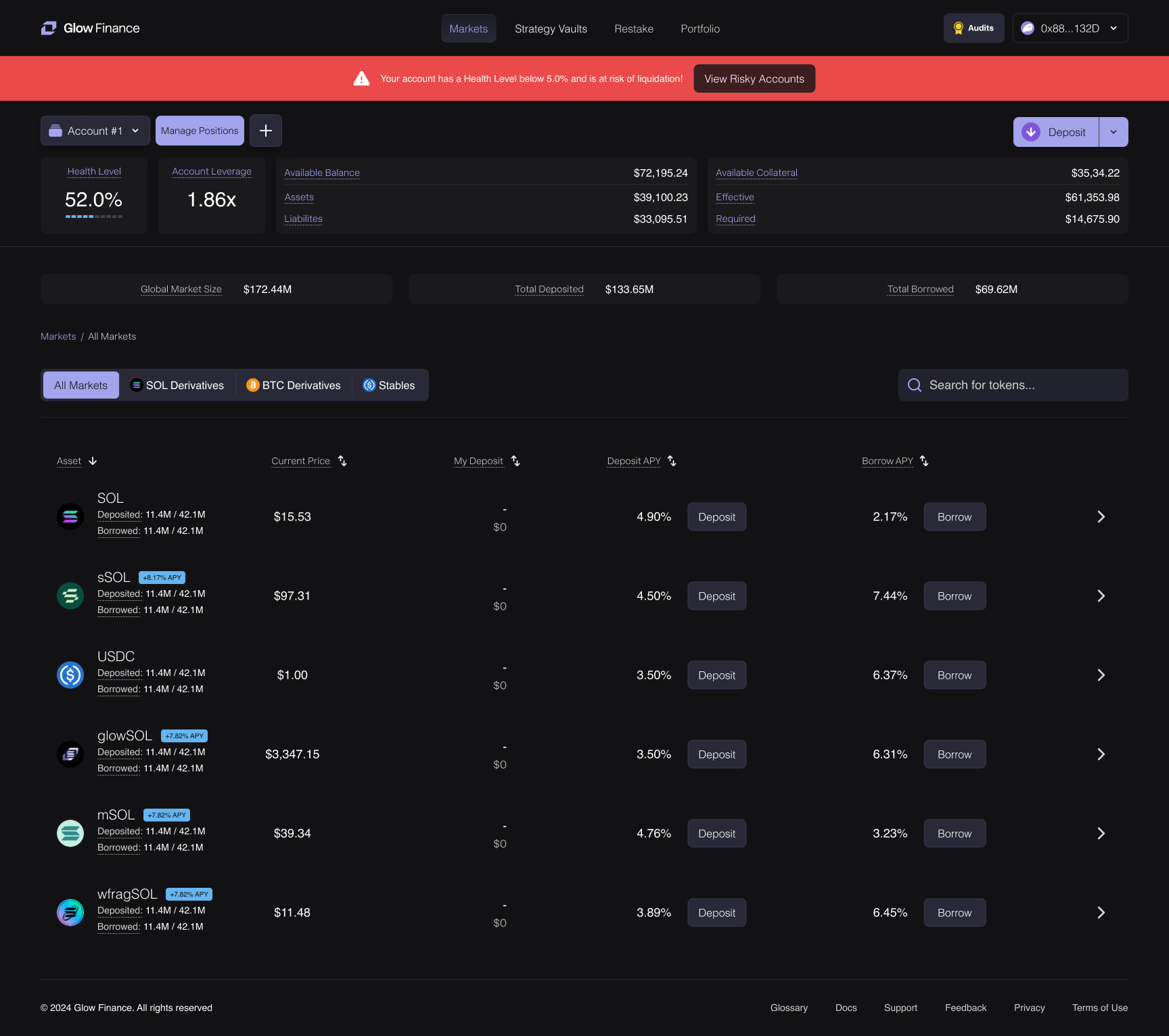
- 5.0% Threshold Warning: The banner is triggered when the Health Level of any margin account associated with the currently connected wallet drops below 5.0%.
- Health Alert Banner: it is displayed globally throughout the app, regardless of the page or section the user is navigating. It ensures users are promptly notified when the Health Level of any margin account associated with their connected wallet drops below 5.0%
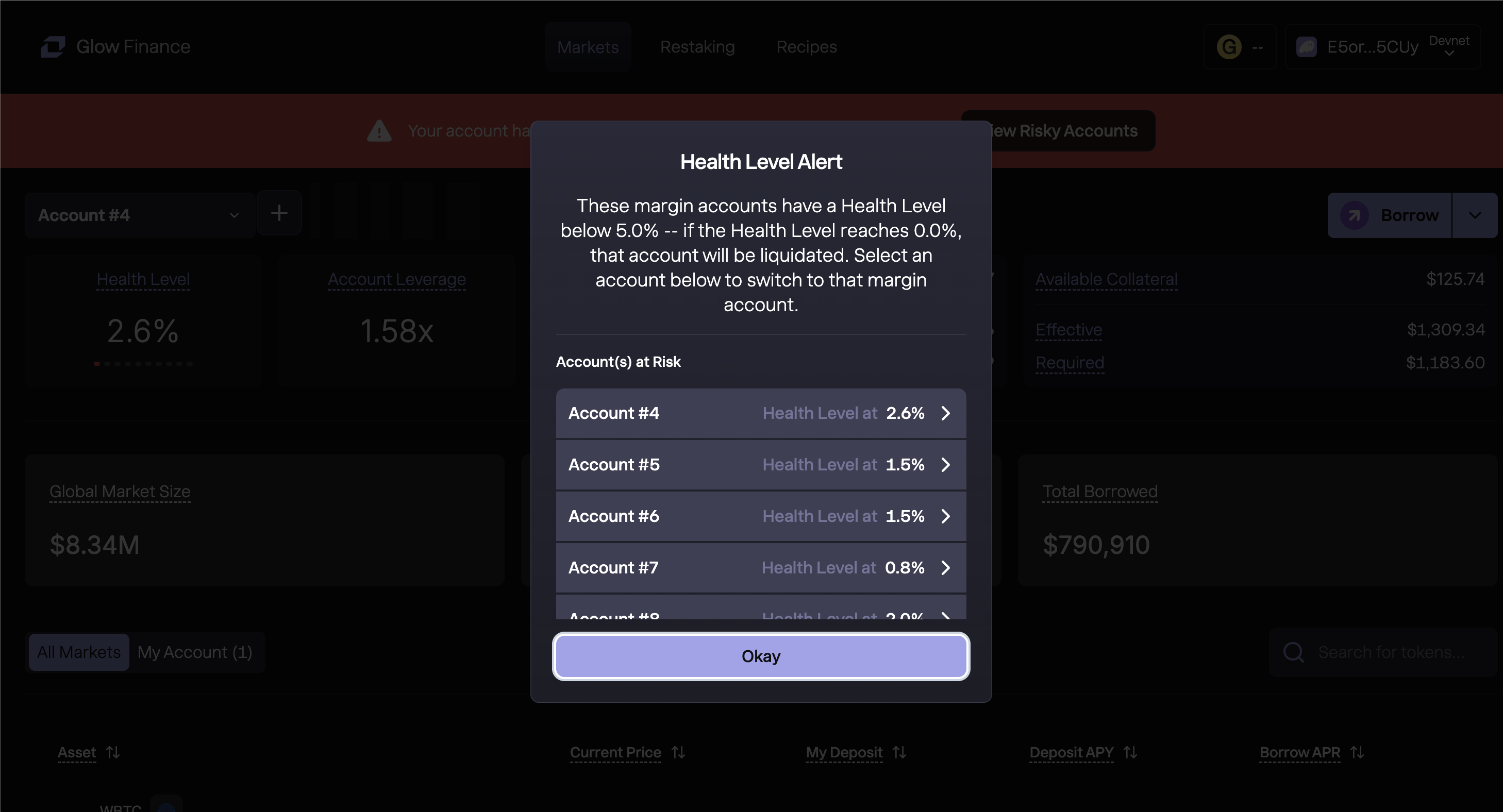
- Health Alert Modal Summarizes all at-risk accounts, helping users prioritize which accounts require immediate action.
Liquidation Notification
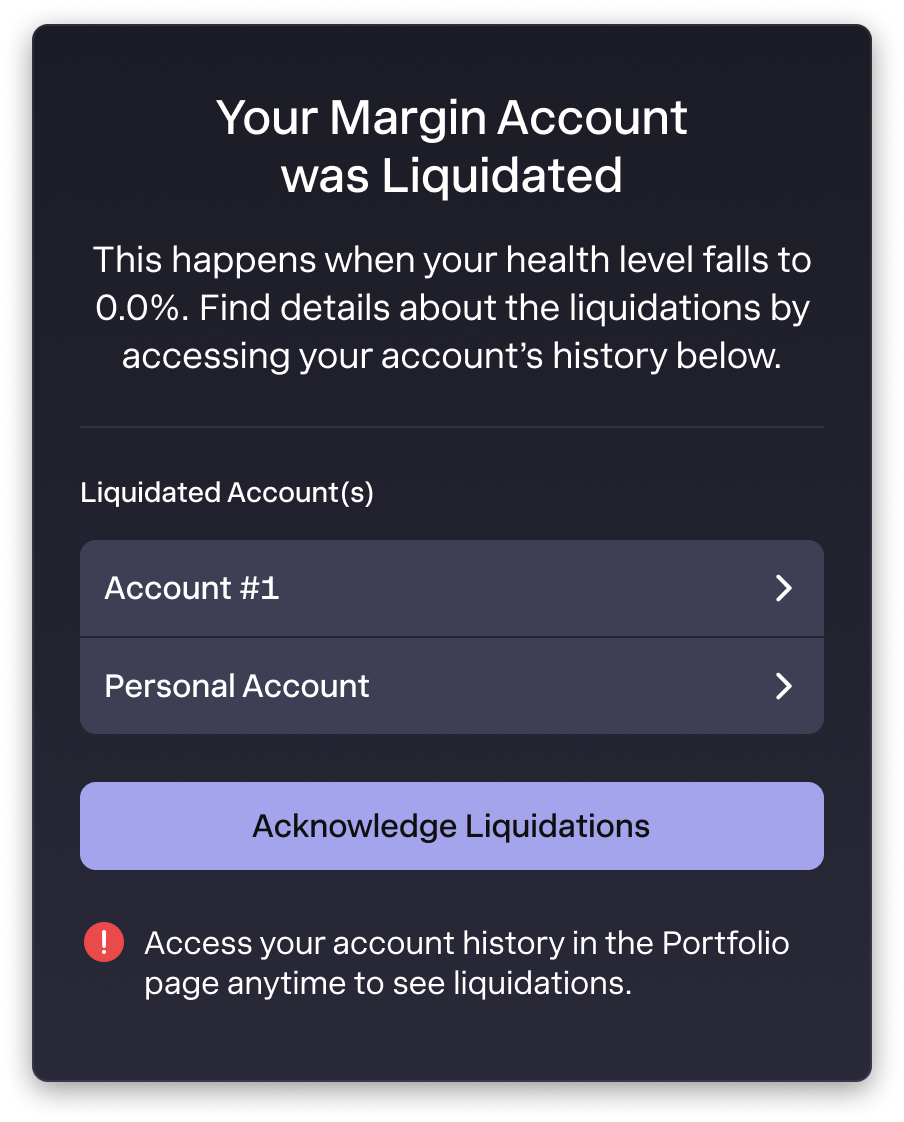
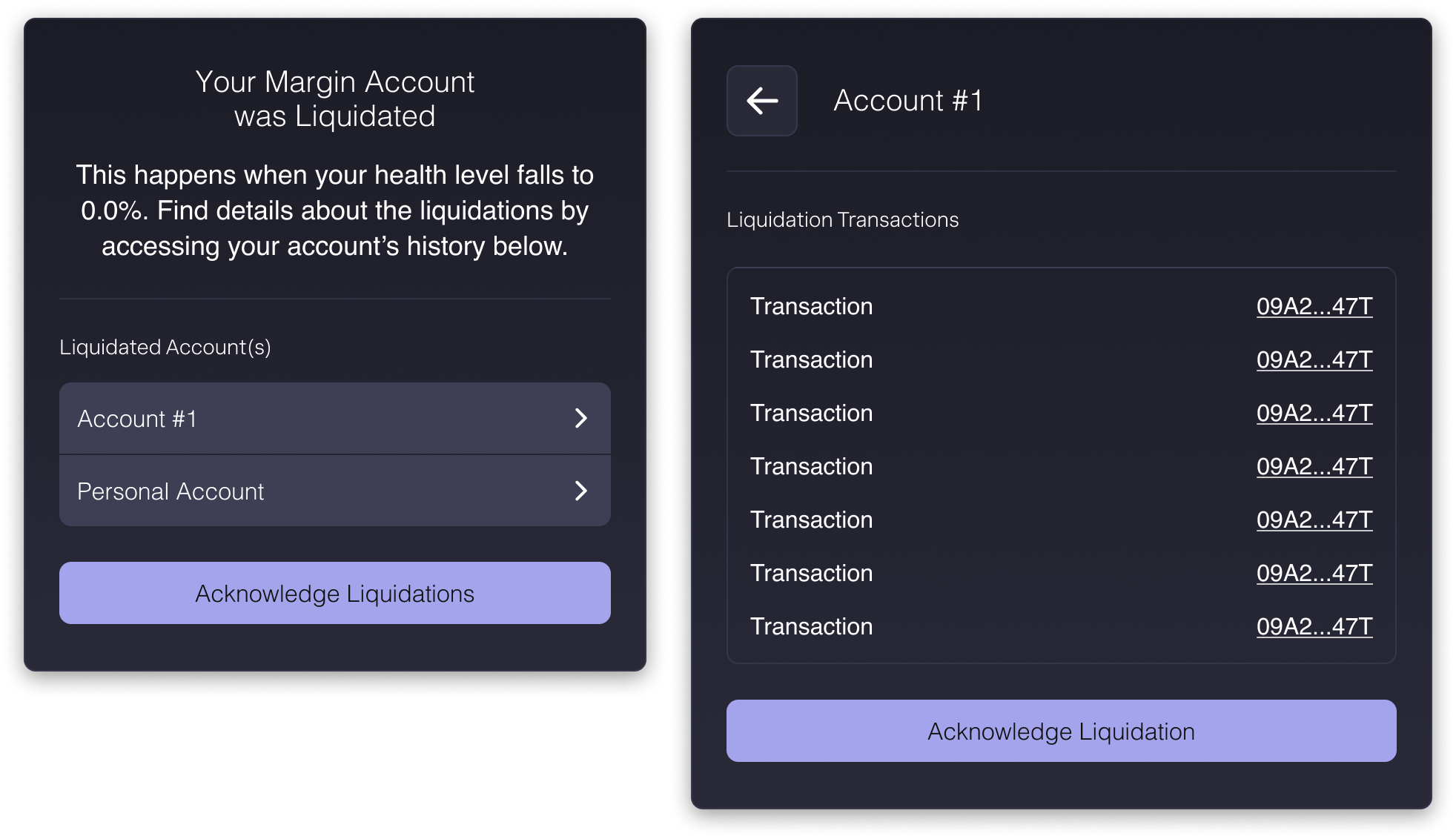
Post-Liquidation Modal When liquidation occurs, users are notified via a dedicated modal.
- Account(s) Liquidated: A detailed summary of the affected accounts. The modal displays the accounts liquidated since the last time the user viewed and acknowledged this information. Once the ACK LIQUIDATIONS button is clicked, the app considers the shown liquidations acknowledged.
- During Liquidation: If your account is actively being liquidated, any attempt to borrow, deposit, or withdraw will be blocked, and you’ll see the following message:
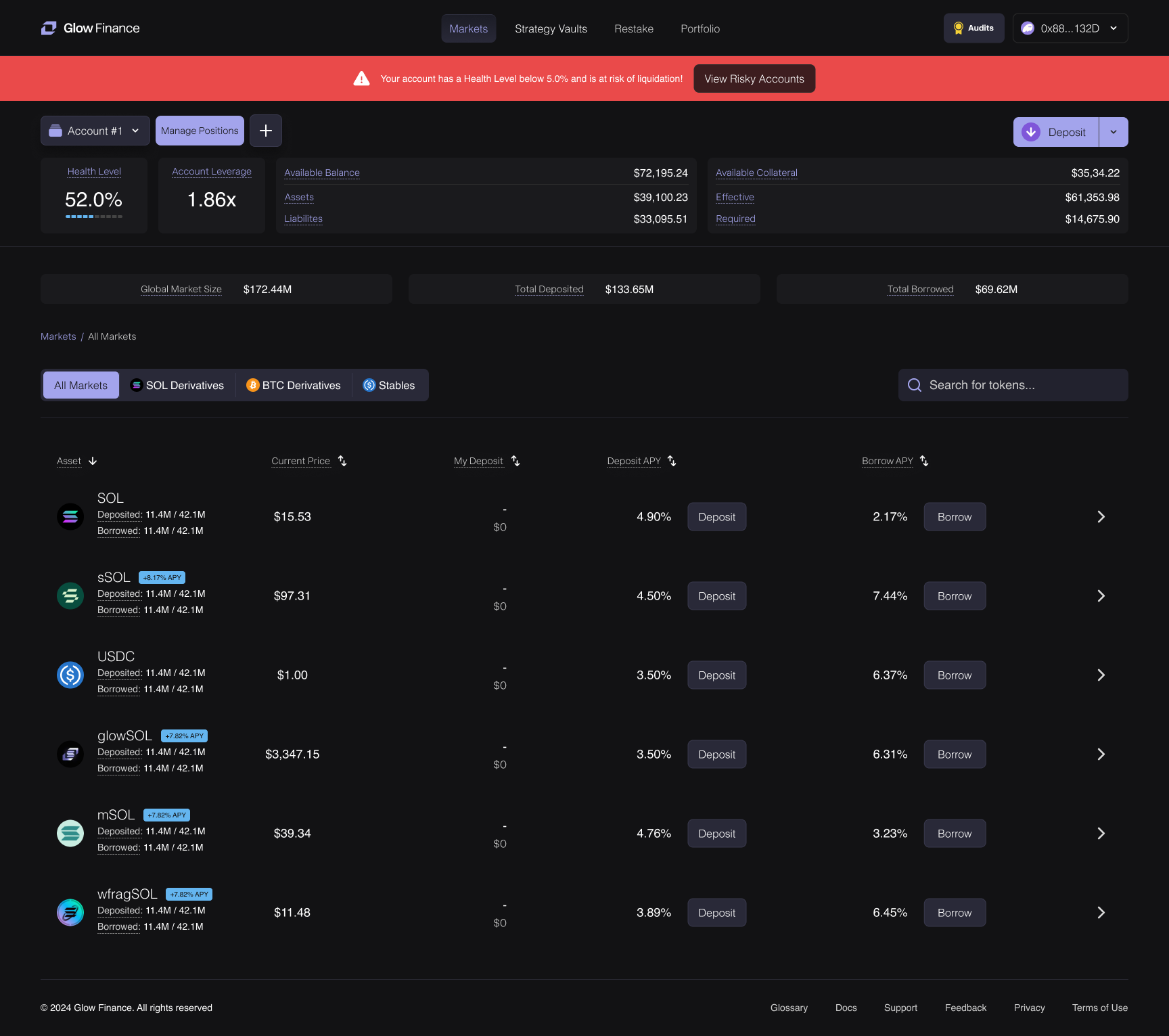
This safeguard ensures the liquidation process completes without interference. Liquidations on Solana are typically executed very quickly due to the network’s high throughput and fast finality, so users are unlikely to encounter this state for more than a brief moment.
To help prevent accounts from reaching this stage, Glow displays a Health Level warning banner when an account’s Health Level falls below 5%, giving users an opportunity to add collateral or repay debt before liquidation is triggered. For more information, you can check the Health Level article. Once the liquidation ends, your account may either be fully closed or resume normal operation, depending on the remaining collateral.
- Asset Breakdown: When a user clicks on one of the liquidated account rows in the initial modal, they are directed to a detailed view modal. This second modal provides a comprehensive breakdown of the liquidation, liquidation fees, timestamps, and a link to the corresponding blockchain transaction on SolScan’s block explorer for full transparency.
Managing Risk with Health Levels
Glow Finance equips users with tools to manage their portfolio risk effectively by monitoring and improving their Health Level. A higher Health Level indicates a more stable account, reducing the likelihood of liquidation. For users seeking detailed guidance on strategies to maintain a healthy account, including depositing collateral, repaying borrowed assets, or adjusting leverage. For more information, you can check the Health Level article.